The latest edition of my San Francisco and California Voter Guide.
Howdy Howdy Howdy – whelp this is my first ‘Deep Slate since the Great Calamity of November 2024 and I’m almost myself again. As part of my personal rehab, I’m here to give you my opinions on protecting and advancing our dear California in the face of the Great Calamity.
The good news is that midterms are looking like they will be our first real chance to take back some control of the country. Now, in June, as the prelude to those midterms, we have primary elections in several important races with national implications, such as CA Governor and US Congress!
As you probably know, California is a “Top-2” primary state which means that the top two vote getters in any primary election will run for the seat in the upcoming actual election – so now we are deciding who gets to run in the November midterms.
Two last quick notes and then let’s dive in!
– I want to apologize for this post being so tardy, a scant few days before ballots are due – VOTE BY TUESDAY 8PM!
– This year, I added a note about AI use in this post!
If you want to receive this voter guide (no spam!) every SF election cycle, send me an email and I’ll add you to my distribution list.
GO VOTE!
Thx
‘deep
.ps Wondering things like: What is this? How did I come up with these? Click here. Wanna know where to vote? Or stuff about Oakland or San Jose? Click here.
.pps BIG THANKS to all of you who asked for my recommendations over the years. I’m truly honored by your interest! And HUGE thanks to Kimberly, my lovely wife, for proofreading this and also for being so supportive of all my meetings and involvements!
.pps: Don’t forget to #votingstickerselfie AFTER YOU VOTE! (Take a pic with your voting sticker on your nose & hashtag it as #votingstickerselfie everywhere you can!)
OK – let’s do this!
THE LIST:
Notes:
- If you just want this list as a handy, printable text version, just click here.
- The more CAPITALS, the more strongly I feel about it – especially on ballot measures.
- Click the title link to jump to the details for that item.
- Click here to download the plain text version.
FEDERAL ENDORSEMENTS:
US Congress, D11: SCOTT WIENER
STATE CANDIDATE ENDORSEMENTS:
Governor: Tom Steyer no Katie Porter – ACK – OK OK Tom Steyer
Lt. Governor: Michael Tubbs
Secretary of State: Shirley Weber
Controller: Malia Cohen
Treasurer: Eleni Kounalakis
Attorney General: Rob Bonta
Insurance Commissioner: Jane Kim
Board of Equalization, D2: Abstain
State Assembly, D17: Matt Haney
State Assembly, D19: Catherine Stefani
CA Superintendent: Anthony Rendon
JUDICIAL ENDORSEMENTS:
Superior Court, Seat 16: Alexandra Pray
SAN FRANCISCO CANDIDATE ENDORSEMENTS:
Board of Supervisors, D2: Stephen Sherrill
Board of Supervisors, D4: None
Board of Education: Phil Kim
Prop A: Earthquake Safety and Emergency Response Bond: Yes
Prop B: Lifetime Term Limits for Mayor and Members of the Board of Supervisors: No
Prop C: Decreases to Business Taxes: No
Prop D: Increases to Business Tax Based on Comparison of Top Executive’s Pay: No
THE DETAILS:
Note: the more CAPITALS the stronger I feel about it, especially on ballot measures.
FEDERAL ENDORSEMENTS:
US Congress, D11: SCOTT WIENER
This and the Governor’s race are the two biggest races this cycle, and this one is nearest and dearest to my heart.
I have tremendous respect for Nancy Pelosi. She’s been a powerhouse in Congress and has really shown how to be a Congresswoman and a Speaker and Minority Leader. She also makes things happen – right or wrong.
All this leaves us with REALLY big shoes to fill.
Scott Weiner has proved time and again that he’s the one of the smartest and hardest working legislators we have.
On nearly every issue I care deeply about, he’s been out ahead, with bill after bill on climate, public transportation, housing, and a host of other significant issues. Scott is one of the thought leaders in the state legislature: not just passing, but authoring these bills. That’s the kind of leader our problems need. (And I tend to agree with him more often than I do Pelosi.)
As for the other two candidates:
– For all my respect and real appreciation of Pelosi, her endorsed candidate, Connie Chan, is NOWHERE CLOSE to the kind of leader we need in Congress. Connie Chan has stridently opposed climate-mitigation, sensible transportation planning, and public benefits like Sunset Dunes in her district:
1. She was strongly against closing JFK Drive to Cars in 2022 (despite insisting to transit activists during her campaign that she was for it), and
2. She opposed the creation of Sunset Dunes Park in 2024 (closing the dying Great Highway to cars) and then tripled down by repeatedly trying to rescind the will of the voters in 2025 and continues to do so.
Even if you don’t care about that stuff as much as I do, just read this bit from The Chronicle’s “Endorsement: There’s only one candidate capable of filling Pelosi’s shoes in Congress. That’s Scott Wiener”:
We have no such questions about Democratic San Francisco Supervisor Connie Chan’s commitment to the city and its residents. Unfortunately, she doesn’t have meaningful ideas to improve their conditions.
Chan is running on a campaign platform of progressive taxation to expand essential services for working people and the vulnerable, touting her fiscal savvy gained from serving as chair of the Board of Supervisors Budget and Appropriations Committee. She supports the proposed California billionaire tax and local efforts to increase taxes on wealthy companies.
Yet when we asked what a more progressive tax regime should look like at the national level — which would be part of her job to figure out in Congress — she stumbled, eventually asserting that we should tax autonomous vehicles to fund transit and impose a levy on AI companies. These are fundamentally local California ideas, not federal ones. And they are emblematic of a candidate not ready to step into Pelosi’s shoes.
The only thing I’m curious about Connie Chan is, “why is Pelosi endorsing her”? Maybe she was annoyed that Scott started pushing for her seat before she decided not to run? Maybe she wants to support women candidates? 🤷🏽♂️🤔🤦🏽♂️ Dunno!
Yep. Strong pass.
– Saikat Chakrabarti: [Update: I’ve gotten some pushback about the tone of my original post on Chakrabarti, which seems fair – it was overly harsh. My apologies.] That leaves us with Chakrabarti, who has positioned himself in the AOC/Sanders mold.
Look – I’m all for blowing 💩 up and starting over in many ways, but I’m old enough to know that our problems are real and we need to really get things done. This seems to be the appeal of the Chakrabarti campaign. And I get it. But I don’t believe he can get it done.
Here are some of my reservations:
– Congress is about coalitions and moving compromises, and legislative experience is a big help here. It’s really really hard to make change in a large (and very un-San-Francisco-bubble) national legislature and so I’m deeply skeptical any of SC’s great sounding ideas can possibly be delivered.
– If he was interested and able to make a movement to make such change, why not start in San Francisco – we certainly need it & if he had the power to make transformative change here in our bubble, I’d have more faith in his ability to do so nationally. Politics is hard and I have a great appreciation for those who do it well (like Pelosi, who is probably a lot farther from my values than Chakrabarti or Wiener to be honest.)
– The fact that he hasn’t voted here very often is not a good sign in my book.
– Finally, I have to ask, since Chakrabarti is definitely leaning into the AOC/Sanders thing, why haven’t they endorsed him?
In the end, I’d love to be wrong about him (Hey I was against Scott back in 2010 during his successful run to be a Supervisor) and he is really about building something better than the current Democratic Party, but color me skeptical. (Here’s a good bit of back and forth on him from Poltico)

STATE CANDIDATE ENDORSEMENTS:
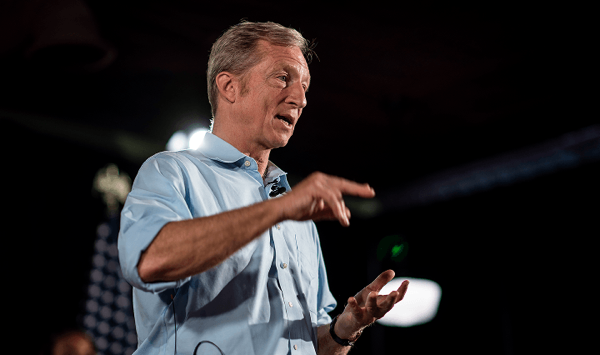
Governor: Katie Porter/Tom Steyer AGH!” → Tom Steyer
This is the other (and bigger) major race this cycle. Governor of California.
OK, I’ve been flipping every few seconds between Katie Porter and Tom Steyer.
I’ve landed on Steyer, but don’t poke me with a stick. I might flip again. It’s like that.
To be completely honest, I started from a place of not knowing a lot about any of the major candidates. Becerra had vague positives for me. Porter impressed me when she ran for US Senate in ’24. Steyer has been on my radar for his climate focus in the 2020 presidential election, so I’d been leaning Steyer, but very shallowly.
After listening* to them some more and doing a bit more reading, it’s clear that for me, the race really comes down to Steyer and Porter.
I think the best candidate in this race for governor is probably Katie Porter. She’s really smart. She’s a really down-in-the-details workhorse and I’m optimistic that she can figure out how to run a big enterprise like the world’s fourth largest economy.
Also, she’s a woman. Super bonus points for that.
So then, let’s talk about Steyer. He’s smart, he’s passionate, and most importantly he’s put climate change at the front and center of his approach to politics.
What’s the problem? As The Chronicle points out, his positions aren’t as thoughtful or realistic as they should be on numerous important things – like housing. Especially when you stack them against Porter’s. He also doesn’t have any real legislative experience like Porter which is big because governing isn’t about “Here is what I stand for, make it so!”, it’s about “Here is what I stand for, what the hell can I actually get done?”
So we’re back to Porter… and that’s where this whole top two primary thing spins my head. All the polling suggests that the top two vote getters will be Democrat Xavier Becerra, and Steve Hilton, the idiot Republican of the Month, endorsed by Trump.
Becerra is…. fine. As I said to a friend, he’s not terrible, he’s just not particularly good. He has some good ideas, some not so great ones, and is a by-the-numbers California Democrat. We deserve more. [Ugh. Ok – he’s pretty bad after all. I just saw this as I was finishing this post: Politico’s “Xavier Becerra has doubts about California’s EV ambitions”]
I’d much much rather this race in November be between Becerra and Steyer/Porter than Hilton, but it doesn’t look like Porter has a chance to edge past Hilton and it a two- democrat ticket. But Steyer does, and he doesn’t need to win, he just needs to get more votes than Hilton.
So for me this ends up coming down to, “do I pick the best candidate, or do I pick the best outcome.” I hate it when you make me choose between those two. But like I’ve said before, we’ve got real problems and need real solutions, like now. So Steyer. Sorry Katie. 🥺
*This Ezra Klein podcast was really really good: “I Have Some Questions for the Democrats Who Want to Run California.”
Lt. Governor: Michael Tubbs
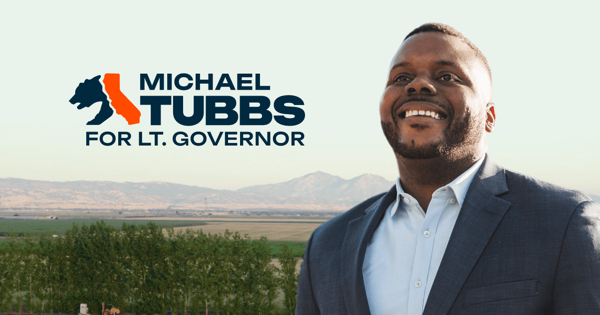
I don’t know a lot about the candidate for Lieutenant Governor, but luckily they don’t do a lot 🤷🏽♂️. California Environmental Voters likes Michael Tubbs and Josh Fryday and The Chronicle’s endorsement of Tubbs was particularly compelling. Done. ✅
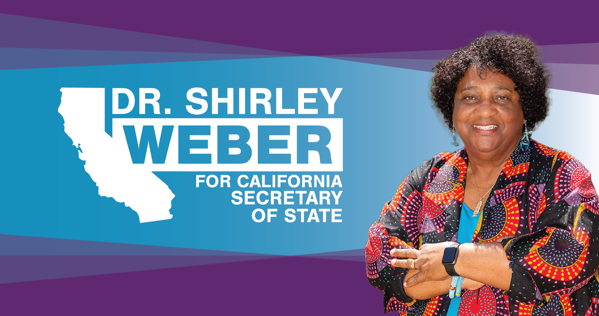
Secretary of State: Shirley Weber
I don’t have much new to say Secretary of State Weber from what I wrote in my June ’22 ‘Deep Slate (below), but you should do yourself a favor and read the thoughtful Chronicle endorsement if you’re interested:
Weber seems to be an excellent choice for Secretary of State: she’s done the job admirably, by all reports, working to make sure our elections remain fair and free, making sure parolees are aware of their voting rights, combating election misinformation. Done.
Controller: Malia Cohen
As I often have said “It’s hard, if not impossible, for me to get excited for this race. Malia is a nice person, but…” and so it goes again. Read the Chronicle’s “Endorsement: A cautious recommendation for California state controller” if you want to understand my hesitance, but she’s the one we’ve got.
Treasurer: Eleni Kounalakis
I don’t have much to say about the Treasurer’s race. California Environmental Voters raved about Kounalakis in 2018 and she’s done fine as Lt. Governor since then. The Chronicle sums it up well:
With her thorough grasp of the treasurer’s complex duties and the political gravitas to get things done, Kounalakis deserves your vote.
Done. ✅

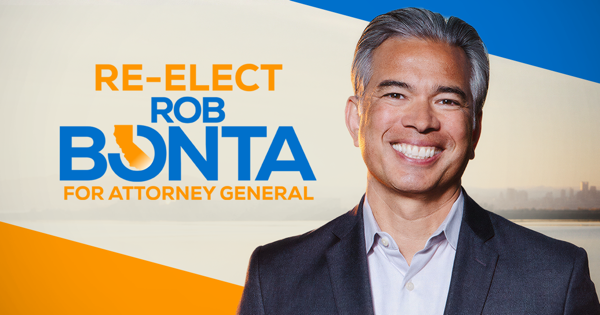
Attorney General: Rob Bonta
I’m pretty positive on our incumbent Attorney General, Rob Bonta. In addition to normal CA things, he’s also the point person on legally blocking the jaw dropping abuses of the Trump administration when he can. I liked this quote from the Chronicle’s endorsement:
As attorney general, Bonta has filed 67 lawsuits against the Trump administration, notching several key wins — including protecting $600 million in scientific research funding for the University of California, blocking cuts to California child care funds and ensuring AmeriCorps could continue funding workers in San Francisco public schools.
Done. ✅
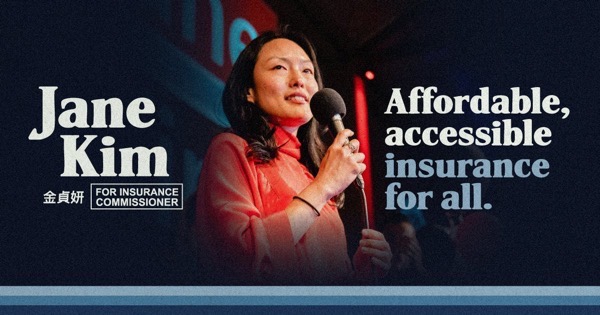
Insurance Commissioner: Jane Kim
According to Ballotopedia, here is the job of the Insurance Commissioner:
The commissioner oversees the California Department of Insurance, which regulates the state’s insurance industry. The Department of Insurance is charged with licensing insurance companies and reviewing their financial statements, establishing rate regulations, investigating consumer complaints, and punishing insurers with fines or penalties for regulatory noncompliance.
1. This historically sleepy technocratic office really should not be an elected position.
2. To call it “sleepy” is so “pre-climate change”
A powerful combination of climate-change fueled disasters (Palisades anyone?) and insurance companies fleeing CA (maybe easier money elsewhere?) and perhaps ill-advised insurance reforms (?) has brought our State’s insurance market to a crisis point – in home owner insurance specifically. We need someone who gets it and who will start working on real solutions.
Of the candidates, Jane Kim is a friend and smart and capable so I could easily vote for her. But Ben Allen is endorsed by the California Environmental Voters and the Sierra Club, so I’m also strongly considering him. To be honest, like The Chronicle, I’m a bit skeptical of the pragmatism of Jane’s “get tough on insurers” approach. But for me she edges Allen out, because all other things being equal, I’ll give the smart, capable woman the benefit of the doubt.
Board of Equalization, D2: Abstain
Sigh – same as what I wrote in 2018:
After years of being duplicative of the Franchise Tax Board at best, and a nest of corruption and nepotism at worst, the Board of Equalization has been reduced to doing almost nothing. It needs to be dissolved so I suggest you abstain from voting for it. If you’re curious, a good place to start is the Chronicle’s editorial.
State Assembly, D17: Matt Haney
State Assembly, D19: Catherine Stefani
Matt Haney and Catherine Stefani are both running unopposed. So we’re done. I’ve never been particularly big on Stefani, but I’ve always appreciated Matt and his policy work is pretty good (90% lifetime from the California Environmental Voters). That said, I’m starting to have some serious doubts: his quasi-personal spending of taxpayer money is (at best) a bad look. But there is a reasonable chance that it’s a much bigger breach of trust – and there are two FPPC investigations* working to figure that out. I’ll reserve judgement for now.
Matt – say it ain’t so.
*There were two as of August of 2025 at least – I haven’t been able to find any updates since then. (Anyone know more info?)
CA Superintendent: Anthony Rendon
Yet another state race that I don’t know a ton about and I’m not sure should really be elected. A friend asked me what the Superintendent does – it’s pretty much what you’d expect:
The California Superintendent of Public Instruction is an elected, constitutional, state executive position in the California state government. The superintendent oversees the California Department of Education and, by extension, all of the state of California’s public schools. He or she executes the policies of the California Board of Education, which is the school system’s primary governing body. The superintendent also manages the operational side of the school system; he or she licenses teachers, maintains school property, and fulfills other administrative duties. (Ballotpedia)
The Chronicle had nice things to say about Richard Barrera (who by all accounts seems a good choice), but I’m going with California Environmental Voters’ pick, Anthony Rendon.
JUDICIAL ENDORSEMENTS:
Superior Court, Seat 16: Alexandra Pray
I don’t feel great about electing judges. They aren’t allowed to say much about positions (nor should they) so what can we vote on? I wrote a good post about judges back in 2018:
Though Superior Court judges are pretty much always appointed, they technically do stand for election. This is because when a judge wants to retire, they usually step down mid-term so that the sitting Governor appoints the next one. While this is not particularly democratic, it is good in that they can make decisions without fearing the political backlash. (The Bay Guardian smartly points out that “The unanimous decision desegregating the schools in Brown v. Board of Education would never have survived a plebiscite in 1954, nor would the judges who signed it.”)
Like most candidates we’ve seen, both of this year’s candidates are well qualified and will probably make good Superior Court Judges. The Chronicle and a lot of people I trust back Assistant District Attorney Phoebe Maffei, and she’ll probably be fine if she wins. Deputy Public Defender Alexandra Pray seems to have less support, but I’ll go with a public defender over a prosecutor, because they seem to get appointed less.
SAN FRANCISCO CANDIDATE ENDORSEMENTS:
Board of Supervisors, D2: Stephen Sherrill
District 2 has very rarely elected good supervisors; in fact, many of them have been horrible. Given that, it’s nice to see a D2 candidate with a good shot at winning (appointed incumbency!) who I agree with on several important ideas. To be sure, there are a lot of question marks (some big*) here, but I’ll go with our decision at the San Francisco League of Conservation Voters “His demonstrated work to bring housing, accessible transit, and environmental priorities to city governance— the topics in focus for this endorsement process— make him an excellent candidate for his district.”
This contrasts nicely with his alternative, Lori Brooke, who was summarized by the Chronicle with this NIMBY gem “Brooke said that her district is simply not the place for large housing projects.”
Ok – done. Sherril. ✅
(*He was an intern in the G. W. Bush White House, and a Republican until the Obama years? There was a time in life where this was instant disqualification for anything… Then Trump happened.😱)
Board of Supervisors, D4: None
Ugh. District 4 is in fact a 💩-show. Here’s a bit from our write-up at the SF League of Conservation Voters:
Although three of the candidates — Alan Wong, Natalie Gee, and Jeremy Greco — showed real alignment with our priorities in some areas, none made a compelling enough case across each of these critical issues (housing, transportation, and Sunset Dunes) to earn our endorsement. Wong supports density and transit-first measures but hasn’t supported maintaining Sunset Dunes as a permanent park. Gee supports many transit-first policies but proposes restrictions to the Family Zoning Plan and also doesn’t support keeping Sunset Dunes permanent. Greco supports Sunset Dunes, but offered unclear reservations about Slow Streets and upzoning.
So: none from me either.
Board of Education: Phil Kim
The SF School Board continues to be in terrible shape.
I wrote this four years ago and after a brief moment of progress, it’s been more of the same.
The dysfunction and negligence of the School Board has been a problem way too long. The pandemic made a bad situation much, much worse. In recent years, it seems that every person interested in politics as performance art has gravitated to SFUSD and set up shop on the Board.
Getting good, smart people onto the School Board remains a desperate imperative – these are our City’s kids*!
The one candidate in the SFUSD race that seems really focused on the critical details of running the school system (fiscal responsibility, organizational effectiveness, enrollment, facility planning) is Phil Kim.
The SFLCV write up is good**, but The Chronicle’s is better.
There is one open seat and one good candidate: Phil Kim. Done ✅
*As the parent of a school-age youngin’, I feel like it is worth disclosing that my child does not attend an SFUSD school, so I do not have first-hand knowledge of SFUSD as many of you may. I tell you that to inform how you weigh my comments against your own lived experience of the SFUSD system.)
**And I think I wrote the initial version 🫠?
Prop A: Earthquake Safety and Emergency Response Bond: YES
Ok – this is a no-brainer. Many years ago, some wise person in San Francisco* presumably realized that all the seismic work we need to do was too expensive to do in one go, so every few years we get one of these bond measures to pay for important infrastructure fixes. From SPUR:
Voters overwhelmingly approved Earthquake Safety and Emergency Response (ESER) bonds in 2010, 2014, and 2020. These bonds funded critical seismic upgrades to aging public safety infrastructure, ensuring essential facilities can remain operational after major disasters. Because the city owns hundreds of aging municipal buildings in need of upgrades, ESER bonds are proposed on a four- to eight-year cycle.
This is the latest one. Just do it. (And if you need more than that, read SPUR’s excellent write up – lots of great detail there)
*If anyone knows how this came to pass, do let me know!
Prop B: Lifetime Term Limits for Mayor and Members of the Board of Supervisors: No
This is dumb. First of all, term limits are a mixed bag: in some real ways, they prevent stagnation and provide new ideas, in other real ways, they lead to brain drain and less capable legislators, as well as tedious games of political musical chairs. When I was younger, I thought they were a good idea, but I’m less and less convinced (damn I miss sane and steady legislators in Washington for example!). But regardless of how you feel about term limits, crafting a ballot initiative to stop one person from ever running for office again because you’re sick of?/afraid of?/intimidated by? him (Former Supervisor Aaron Peskin), is petty and stupid and bad policy. Just NO.
And no, it doesn’t matter what you think of Aaron, or even if you know who he is. I repeat, this is just dumb. No.
.ps The Chronicle’s write up has some good quotes, SPUR’s is thoughtful and does a really good job of touching on the pros and cons of term limits… both are opposed.

Prop C: Decreases to Business Taxes: No
Prop D: Increases to Business Tax Based on Comparison of Top Executive’s Pay: No
These two are related in that both are designed to monkey with the new “gross receipts tax” we passed with November 2024’s Proposition M. Prop C is terrible and Prop D is probably not a good idea.
The gross receipts tax has only been in effect for a year and a half or so – so why are we changing it so soon? Is something wrong with it that needs to be fixed?
No.
Prop D was put on the ballot by several unions rightfully concerned with the fact that under Trump’s “One Big Beautiful Bill Act”, the City’s budget deficit is expected to grow. D increases the Top Executive Pay Tax to deal with this shortfall. Though I supported a pre-pandemic tax that was somewhat similar (Prop L in 2020), everything has changed: downtown is struggling, businesses are still recovering, and now we have a fundamentally new (and presumably smarter) gross receipts tax system that is just coming into effect and has yet to be completely understood.
Something like D may in fact be a good idea – but there is good reason to believe it is risky at best. Regardless it is too soon to tell how 2024’s Prop M shakes out.
The City’s Controller’s Office spelled out the “risky at best” angle here:
Prop D “represents a policy choice to raise business taxes in a period when there is substantial evidence that businesses are reducing their presence in San Francisco, relative to other locations,” the controller’s office stated. “San Francisco’s economy cannot credibly be described as being in a downward spiral at the moment. But raising taxes on a shrinking tax base — and thus encouraging further relocation out of the city — does raise that risk.”
And SPUR spells out the “too soon to monkey with” angle here:
The comprehensive reform under 2024’s Prop. M maintained a progressive tax policy that reduced the tax burden on small businesses while protecting the city and taxpayers from volatility and unpredictability. It was developed with rigorous policy analysis and won strong support from a broad coalition. Because the new tax structure only became effective in January 2025, it’s too soon to know what its impacts will be. SPUR believes that the efficacy of the newly adopted tax structure should be thoroughly evaluated, and further analysis should be conducted in partnership with business and labor before returning to the voters with a new revenue proposal.
So, I’m No on D.
That leaves us with Prop C. Prop C as a cynical response to Prop D by the Chamber of Commerce and monied interests. They’re trying to appear to be reasonable “tax relief to help small businesses” when actually it is primarily designed to negate D if it gets more votes; the kicker is that it will mostly just hurt the City’s bottom line. Or as SPUR puts it::
Significantly, it would have a negative net impact on San Francisco’s budget, reducing revenues by an estimated $30 million to $40 million per year at a time when the city is already scrambling to fill a $169 million budget gap for the next fiscal year.
Ugh. NO on C.
.ps To be honest, this type of tax policy stuff is fairly complex and I’m doing a pretty brief version here. I recommend SPUR’s Prop C and Prop D write ups for a more thorough (and still quite readable) analysis. And I really liked The Chronicle’s take on Prop C.
So there you have it! Whew! If you’re new, or curious, here’s all about this post!
WHAT IS THIS?:
Every San Francisco election cycle, I put out my “‘Deep Slate” voter guide – I’ve been doing this since sometime in the late 90’s. This post is my guide for this election!
The format is:
- The LIST: the simple list of my endorsements for this election.
- The DETAILS: the whys and wherefores of each endorsement. This is how I arrived at each position.
- My VALUES: a brief explanation of my values and sources, to help make sense of my opinions.
- Sources: a collection of my sources and a tiny bit about how I arrive at my endorsements.
- Extras: If you want to know where to vote, or want to find older ‘Deep Slates, or some Oakland/San Jose stuff…
Also note that a few days after the election, you can come back and check the RESULTS by clicking here.
MY VALUES:
I recommend reading all of this (it won’t take that long!) to understand how I think, so you’ll have a sense of how to assess my recommendations for yourself.
- I’m basically an idealist, an optimist, and a humanist.
- My opinions come from my experience in local politics over the past 31 years. I’ve done A TON of candidate interviews and lots of lobbying in my roles:
- as a Board member (and former long-time President of) of the San Francisco League of Conservation Voters (SFLCV).
- as a former long-time Board member of the SF Bicycle Coalition (SFBC).
- I don’t get a dime for this. I’m a software engineer by day and a political activist in my spare time.
- The three biggest “norths” of my political compass are environmentalism, social justice and good government (reform type) issues.
- While my views are definitely shaped by my activities in the SFLCV and previously the SFBC, my endorsements do NOT represent the views of either of those organizations.
- I use the term “progressive” a lot, as something I value. Unfortunately, classic San Francisco progressivism has become fairly problematic – but more on that after I mention what it means. In SF, progressivism has historically meant a combination of classical liberal Democratic politics (equity – social, gender, racial, diversity, a sense that government can and should play an important role in solving society’s problems) plus environmental values (sustainability, long-term systematic thinking) and neighborhood-level populism (tenant’s rights, ethnic and socio-economic diversity, populism vs. corporatism). So that’s the good stuff. The bad stuff is that SF’s progressive movement has too often become “circle the wagons and shoot inward” performance art. Pragmatism and progress are too often sacrificed in the name of litmus tests and posturing – and it’s sad to see. I still believe in similar things at the end of the day, but I’d rather get things done.
- I try to be aware of my biases; here are few that come to mind:
- Poorer before richer when considering fairness issues. It’s best if something is fair, but if someone has to get screwed, make it the rich person. Because society always favors the richer.
- The more money a local campaign has, the more questions should be asked of it: if a campaign has a lot of expensive media ads, mailers, etc… why? It might be fine, but the more money, the more questions as to why.
- In some of these races it is a matter of picking between flawed options. 🙁
- Ballot measures are a REALLY bad way to govern:
- Most laws created by ballot measures SHOULD be done in the normal legislature, where they are easier to fix if they turn out wrong: you have to use a another ballot initiative to change or fix something that became law by a ballot measure, whereas the legislature can amend or fix any of their laws whenever they want.
- Another problem is that you have to boil complex issues down to yes/no votes – which rarely is a good idea. But this is what we have, so keep in mind that some good ideas make bad ballot propositions, and a bad idea can sound good in a ballot initiative because the devil is often in the details. Also note that these measures are often gray – there is a lot of balancing going on…
- …Which leads to another fundamental problem: these issues are often complex. When they are, they would be much better served by decision-makers who have time and expertise at their disposal. This is the whole point of a representative democracy: people elect a set of deciders who have time and are given resources to study issues before making decisions on complex legislation. Far too many ballot measures would be better served by more informed choice.
- Budget set-asides are usually a bad idea: a set-aside guarantees the same amount of funding be taken from the general fund every year for a given program. The problem is that in lean years, set-asides then squeeze out funding for other important things, and generally reduce our government’s flexibility. That is fine for public good that is almost always difficult to prioritize like, say, libraries or parks (which chronically get deprioritized, leading to deferred maintenance and more expensive fixes when the money finally does get appropriated) but a really bad idea for normal expenses. Set asides should be avoided whenever possible.
- 90% of my experience and knowledge is about local San Francisco issues, so state issues are a little greyer for me unless I say otherwise. Thus, for state stuff, I do a lot of reading and research from the sources listed below and anything else I can find.
- Just like you, some of my opinions come from listening to those I trust, or tend to trust. Organizations like the ones listed as “bedrock” below get more credence, as well as politicians I support and believe in. Obviously this is dicey, as nothing beats first-hand knowledge and analysis, but that just gets us back to why I think ballot measures suck.
Sources:
My best sources are personal experiences, and interviews and lobbying I’ve done with the SFLCV and the SFBC. But the limits of this are pretty obvious. I have very little direct experience with state issues, so below are some of the sources I use and a bit on how I arrive at my endorsements.
The first source for SF stuff is the official SF Voter guide and for California stuff, the State Voter guide. I like to read the pro and con arguments and also note who is writing them, as that often tells you at least as much as what they say. Also the analysis and explanations are critical. Dig in!
And for good baseline info on all of it, I highly recommend Ballotopedia: A wiki for ballots and elections! This is an incredible resource! I donated and maybe you should too! Here are there SF and CA pages – but you can fine other pages easily too:
Some of my bedrock sources are:
- My own San Francisco League of Conservation Voters (of course) (SF)
- The San Francisco Bicycle Coalition (SF)
- Livable City (SF)
- A great bunch of transit and urban activists
- The California League of Conservation Voters (state)
- The Sierra Club (state and SF)
- SPUR (a.k.a. San Francisco Bay Area Planning and Urban Research)
The groups above, with the possible exception of SPUR, generally share my values directly, and as such influence me a lot. SPUR is somewhat of an outlier, in that they seem a tad more centrist-pragmatic than the others (and occasionally me) but they are pro-urban, good-governmenty and I trust their motives. I particularly enjoy their commitment to sound policy, their clarity of thought, and their thorough write ups – I’d love to have the time and energy to do a slate as well as they do!
For state issues in particular, I really like to look at the various larger city newspapers. I know the most about the SF Chronicle‘s bias – I take them with a grain of salt on local stuff as they tend to be more conservative than me, but on state stuff I like to hear them out. It is also worth checking the other state papers like the San Jose Mercury News, the LA Times and the Sacramento Bee. Sadly, most of these are behind a paywall, but often you can read a certain number for free. (They should all make their endorsement editorials free as a public service.) Ballotpedia often has good links to the various newspapers as well.
In the “Worthwhile but Rabid” category are two more organizations I value, but view their recommendations with caution. Both are super “progressive”, and I tend to share a lot of their values, but they are often are the chorus of the “circle the wagons and shoot inward” progressivism I mention above – so I try to check their work:
- The League of Pissed Off Voters: I’ve never liked their name ( Who can sustain anger for so long!?!) – but I really do enjoy reading their opinions, because they do their homework. Beware of absolutism and litmus tests.
- The San Francisco Bay Guardian: Once the standard bearer of the progressive left in San Francisco, the quality of this source has really declined. They seem to be a bit of a shell ever since they were basically dissolved and the name got sold off to one of the editors. Beware of “more heat than light.” Still, it is worth reading.
Some other sources I check out are:
AI Disclaimer:
All the writing in this post was directly mine. There is no AI generated content. I have certainly used AI to help me produce this work (Claude wrote me a script to help automate a lot of tedious cutting and pasting and searching and replacing!) and proofread it. I also used AI to help me do web searches and find things in my previous ‘DeepSlates.
Rest assured that all positions are mine, not Claude’s! 🤖😜
Extras:
Where To Vote:
SF has set up an awesome SF Voter Portal, a one stop website for all your “how to vote” type questions!
It should have anything you need to know:
- Where do I vote?
- Am I registered
- Has my ballot been counted?
- etc etc…
Oakland & San Jose:
I don’t pretend to know the ins and outs of Oakland or San Jose politics (If you have sites you like, please put ’em in the comments!) but the always thoughtful and thorough SPUR folks do SF, Oakland, and San Jose. See my thoughts on SPUR’s biases above.
Older ‘Deep Slates:
I’ve been doing the ‘Deep Slate since sometime in the ’90s. You can read all the ones I’ve saved by clicking here; It gets a bit dicey because before 2012, they were email only (not blog posts), so I’ve posted the email versions I could find.
Thanks for all the work and thought as always, ‘deep.